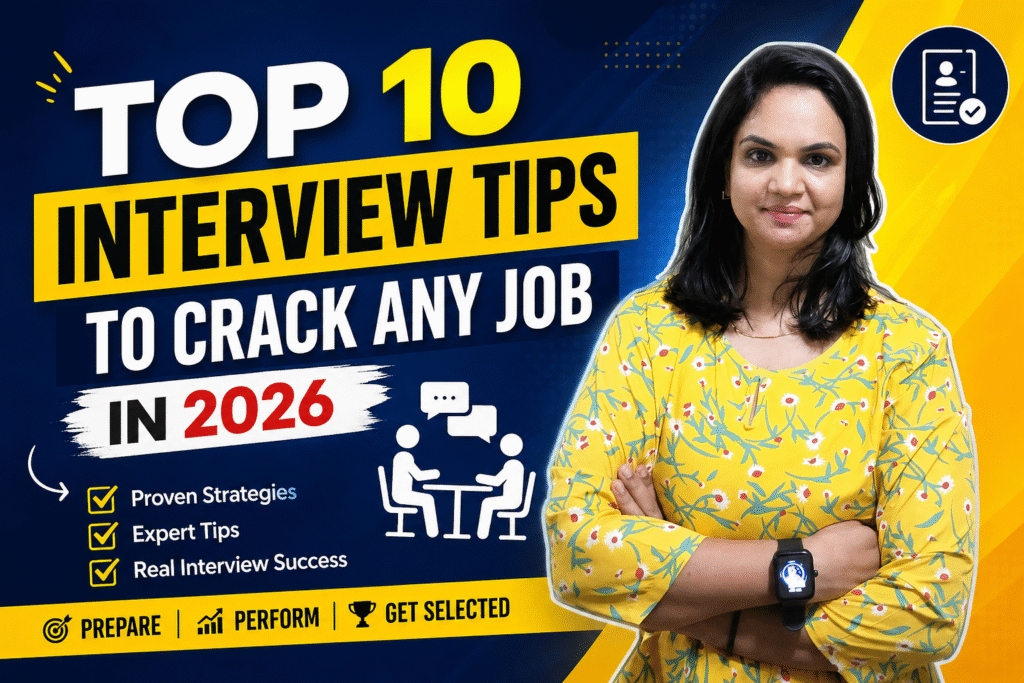

Landing a job interview today is easier than converting it into an offer. Recruiters are not just evaluating your qualifications—they’re assessing clarity of thought, communication, problem-solving ability, and cultural fit.
Whether you’re applying to companies like Amazon or Axis Bank, the selection process has become more structured and competitive. The difference between rejection and selection often comes down to how strategically you present yourself.
This guide goes beyond basic advice. These are pro-level interview techniques that top candidates use to stand out.
1.Engineer Your First Impression (The 30-Second Rule)
Psychologically, interviewers form an opinion within the first 30 seconds.
Your goal is to signal confidence, clarity, and professionalism immediately.
What top candidates do:
- Maintain a calm facial expression and controlled breathing
- Use deliberate, not rushed, movements
- Sit upright with open body language
Advanced tip:
Mirror the interviewer’s tone subtly. This builds subconscious rapport.


Psychologi
🧠 2. Craft a Strategic “Tell Me About Yourself”
This question is not an introduction—it’s your personal pitch.
Use the Present–Past–Future framework:
- Present: Who you are currently
- Past: Relevant experience/skills
- Future: Why this role
Example (refined):
“I’m currently a commerce graduate with strong communication and customer-handling skills. Over the past year, I’ve developed practical experience through training and real-world interactions. I’m now looking to apply these skills in a structured organization where I can contribute to customer satisfaction and grow professionally.”
Pro tip:
Align your answer with the job description keywords.
📊 3. Research Like a Consultant, Not a Candidate

Basic research is expected. Deep research sets you apart.
If you’re interviewing with Amazon or Axis Bank, go beyond the homepage.
Research checklist:
- Business model & revenue streams
- Target customers
- Recent news or product launches
- Competitors
Pro move:
Mention a recent initiative and connect it to your role. This shows genuine interest + business awareness.
💬 4. Master Behavioral Answers (Use the STAR Method)


Interviewers don’t just ask what you can do—they ask what you have done.
Use the STAR Method:
- Situation – Context
- Task – Your responsibility
- Action – What you did
- Result – Outcome
Example:
“In my previous role (Situation), I handled customer complaints (Task). I actively listened, identified the issue, and offered a quick resolution (Action), which improved customer satisfaction and reduced repeat complaints (Result).”
Why it works:
It proves your skills with evidence, not claims.
👗 5. Build a Professional Visual Identity


Your appearance communicates discipline and attention to detail.
For in-person:
- Neutral colors (blue, white, grey)
- Minimal accessories
For virtual:
- Clean background
- Proper lighting (face clearly visible)
- Eye-level camera
Advanced tip:
Dress slightly above the role level—it subtly signals ambition.
⏰ 6. Control the Interview Environment

Preparation is not just mental—it’s environmental.
Before the interview:
- Keep your resume, notes, and documents ready
- Eliminate distractions
- Test tech (for online interviews)
Pro mindset:
You’re not “attending” an interview—you’re managing a professional interaction.
🚫 7. Eliminate High-Impact Mistakes


Small mistakes can create a negative bias.
Critical mistakes to avoid:
- Interrupting or finishing sentences
- Speaking without structure
- Over-explaining simple answers
- Negative talk about previous employers
Pro tip:
Pause for 1–2 seconds before answering. It shows thoughtfulness and control.
❓ 8. Ask High-Value Questions (This Is Where You Win)


Most candidates waste this opportunity.
Ask questions that show thinking:
- “What does success look like in this role in the first 3 months?”
- “What are the biggest challenges the team is currently facing?”
This positions you as a problem-solver, not just a job seeker.
⚖️ 9. Demonstrate Confidence with Humility

Confidence gets attention. Humility earns respect.
Balance it by:
- Admitting what you don’t know
- Showing willingness to learn
- Avoiding exaggerated claims
Golden rule:
Authenticity is more powerful than perfection.
📩 10. Strategic Follow-Up (Most Candidates Skip This)


A follow-up message reinforces your interest and professionalism.
Simple structure:
- Thank them
- Mention one key discussion point
- Express interest
Example:
“Thank you for the opportunity. I especially enjoyed discussing how this role contributes to customer experience. I look forward to the possibility of contributing to your team.”
🧠 Final Insight: Interviews Are About Positioning
Most candidates focus on giving answers. Top candidates focus on positioning themselves as the solution.
If you:
- Communicate clearly
- Think structurally
- Show business awareness
You won’t just attend interviews—you’ll convert them into offers.
Q1. What are the best interview tips for freshers?
👉 Focus on communication, confidence, and preparation. Practice common questions and research the company.
Q2. How can I crack my first job interview?
👉 Prepare your introduction, understand the job role, and practice answering questions with confidence.
Q3. What should I avoid in an interview?
👉 Avoid lack of preparation, poor body language, and giving unclear answers.
Q4. How important is confidence in interviews?
👉 Confidence plays a key role as it shows your ability to handle responsibilities and communicate effectively.
💼 Want to crack your interview easily?
Check my Interview Master Guide
👉https://superprofile.bio/vp/interview-master-guide-%E2%80%93-crack-any-job-interview
📞 Book your 1:1 session for personal guidance
👉 https://superprofile.bio/bookings/manoramasmantra